Speech Blubs: Language Therapy
- 4.6
- Rating
- 5.00M
- Installs
- Free
- Price

 Analysis by App-foxy
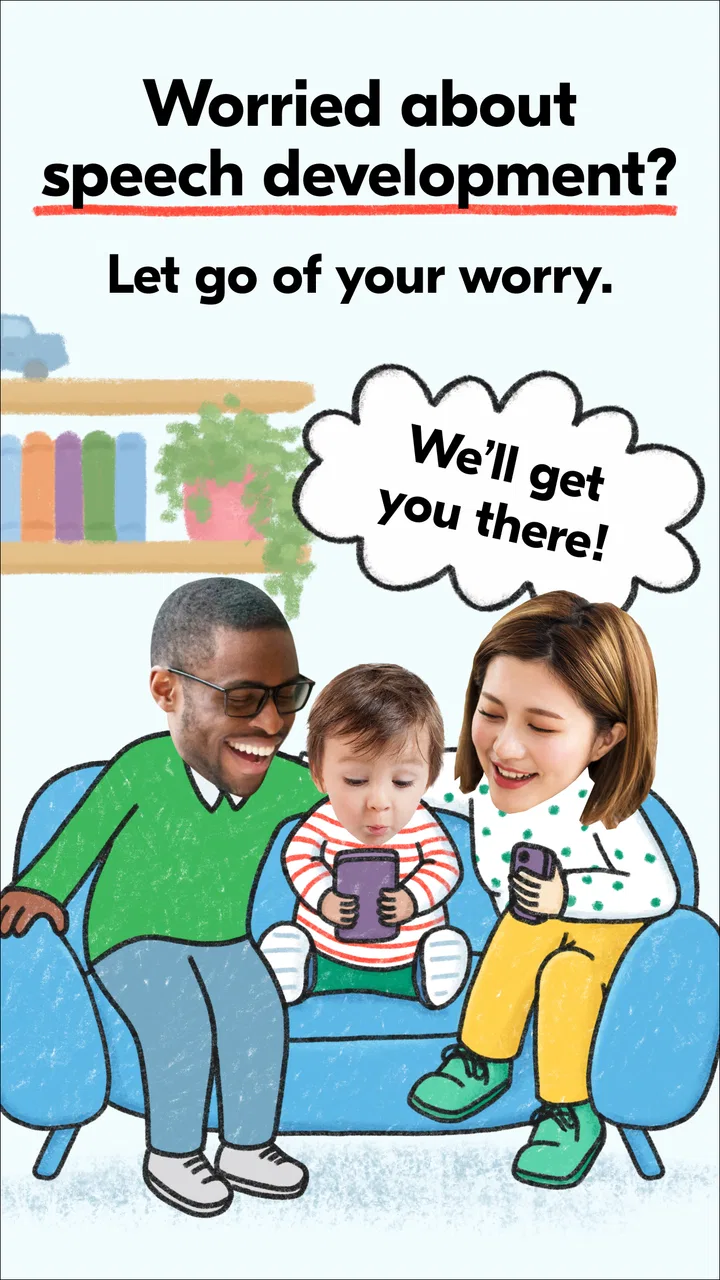
Speech Blubs: Language Therapy is the kind of parenting app I would reach for when a child needs extra opportunities to practise sounds and words between professional sessions. It is made by Blub Blub Inc. and focuses on speech-therapy exercises rather than trying to be a general learning platform. I found its strongest quality in the way it turns short practice moments into something a child can approach with less resistance.
The app is free to download, although it includes optional purchases priced from $9.99 to $99.99 per item. That distinction matters: you can explore the experience without paying immediately, but families who want broader access should look carefully at what is included before committing. It is rated for Everyone, runs on Android from version 7.0 onward, and the current version is 14.2.1.
With an average rating of 4.5 from around 26 thousand ratings, about 1.6 thousand written reviews, and over 5 million installs, it is clearly not a niche experiment. Still, popularity is not the same as suitability. Speech practice is personal, and the right tool depends on a child’s age, attention span, communication needs, and whether a speech-language professional is already involved.
You May Also Like

 Blood Strike: 2.5 Anniversary
Blood Strike’s Loadouts Turn Every Drop Into a Tactical Gamble
A close look at Blood Strike’s custom loadouts: how fast access to signature weapons reshapes its battle royale rhythm, rewards preparation, and narrows the gap between fights.

 Pandora - Music & Podcasts
Pandora’s Music Is Easy to Start, but Harder to Recover
Pandora’s strength is its low-effort path from a seed to a station. Its weak spot is how much confidence it asks you to place in connection, setup, and quiet recovery.

 8 Ball Pool
 Is Built on Rivalries, Rematches, and Routine
A close look at the rivalries, rematches, shared routines, and unanswered safety questions that turn a quick pool match into a persistent mobile community.

 Samsung Music
’s Quiet Strength Is Playing What You Already Own
Its reach comes less from spectacle than from dependable access to a personal library. That simplicity is both the app’s strongest retention engine and its ceiling.

 AccuWeather: Weather Radar
AccuWeather Review: A Quick, Clear Forecast for Everyday Decisions
For everyday plans, the best forecast is the one you can understand quickly. AccuWeather makes rain timing, radar, and local conditions easy to act on, with a few trade-offs.

 Hill Climb Racing
Why Hill Climb Racing Still Turns Crashes Into One More Run
A tiny car, a bumpy hill and one more upgrade: Hill Climb Racing keeps resurfacing because its simple chaos makes every near-miss feel personal.
More From Our News Desk
View All News


How I would build a useful Speech Blubs routine
I’d make the routine predictable without making it rigid: choose one small practice window, keep an adult alongside the child, and connect the target to something happening that day. I’d also note what helped the child engage, so the next session can start from a familiar success rather than a fresh guess. That gives the routine a practical foundation before considering how to recover when an activity feels difficult.
Start with short, repeatable practice
My first recommendation is not to treat Speech Blubs as a lesson that must be completed from beginning to end. A better baseline workflow is to choose a calm moment, open one exercise area, and let the child practise for a short period while an adult stays nearby. The goal is consistency, not exhausting the child with a long session.
That adult presence makes a real difference. A child may tap through an activity quickly, imitate only part of a sound, or become more interested in the visual response than the speech task. I would model the sound naturally, wait rather than pressure the child, and celebrate an attempt even when it is not yet clear. The app can provide structure, but it cannot judge every nuance of pronunciation or decide whether a particular error is developmentally expected.
For a realistic everyday example, imagine using it after breakfast while a parent is getting ready for the day. Instead of handing over the phone indefinitely, I would select one small activity, sit beside the child, repeat the target word once, and then give the child a chance to respond. When attention drops, I would stop. Ending on a positive attempt is more useful than turning practice into a negotiation.
Use it as support, not diagnosis
The most important boundary is that this is a home practice tool, not a replacement for assessment. If a child has persistent difficulty being understood, loses previously used communication skills, becomes frustrated when trying to speak, or has broader developmental concerns, I would involve a qualified professional rather than relying on app exercises alone.
Speech Blubs is more helpful when its activities reinforce goals that a parent already understands. If a therapist has suggested practising particular sounds, words, or imitation habits, the app may make repetition easier at home. If there is no clear goal, I would use it gently for exposure and engagement rather than assuming that every exercise is equally relevant.
Make the adult part of the activity
One subtle mistake is to view the screen as the teacher and the parent as a supervisor. In my experience, the better arrangement is the opposite. The adult supplies the conversation around the exercise: “Your turn,” “I heard that,” or “Let’s try it slowly.” After the activity, I would use the same word in a real situation, such as naming a toy, snack, animal, or item in the room.
This transfer from screen to daily life is where the app becomes more valuable. A child who repeats a word inside an activity still needs chances to use it when asking, choosing, commenting, or responding. I would therefore keep practice connected to objects and routines already familiar to the child instead of treating the phone as a separate world.
Settings worth checking before handing over the device
I would spend a few minutes exploring the available settings and access options before starting regular practice. The practical question is not simply whether an activity looks entertaining; it is whether the child can use it without repeatedly getting stuck, skipping ahead, or being distracted by parts that are not relevant to the current goal.
Because the app contains optional purchases, I would also check the purchase flow carefully before giving a child independent access to the device. Parents should know which parts are available without payment and which activities may lead toward an upgrade. This is especially important on a shared phone or tablet, where a child may tap enthusiastically without understanding what a purchase means.
I would also check the device’s general audio level and notification habits. Speech practice is easier when the child can hear the model clearly and the session is not interrupted by unrelated alerts. These are not special Speech Blubs controls, but they affect the quality of every exercise and are easy to overlook.
Choose the right environment
A quiet room is usually better than a busy car journey or a television playing nearby. The app may hold attention visually, but speech imitation still depends on listening. If the child is tired, hungry, or overstimulated, I would not interpret poor participation as evidence that the exercises are unsuitable.
Another useful habit is to keep the device at a comfortable distance and avoid making the screen the sole focus. I would position myself where the child can see my face as well as the activity. That encourages looking, listening, and copying rather than merely tapping. For younger children, this shared arrangement also makes it easier to stop before frustration builds.
Faster patterns for busy families
Experienced use does not require complicated preparation. I would create a simple routine: open the app at the same general time, choose one manageable activity, practise a small number of attempts, and then connect the target to something outside the app. This removes the daily question of what to do and prevents the session from becoming a random sequence of taps.
A second efficient pattern is to use the app as a transition rather than a reward that lasts indefinitely. For example, a parent might practise before getting dressed, then move directly to naming clothing items. Another family might use it before snack time and then encourage the child to request or identify food. The best shortcut is not skipping the practice; it is linking it to a routine that already happens.
I would avoid opening several unrelated activities in one sitting. Switching constantly can feel productive because the screen stays lively, but it may reduce meaningful repetition. One carefully chosen exercise followed by real-world use gives a parent a clearer sense of what the child attempted.
Repeatable habits that make progress easier to notice
Rather than relying on memory, I would make a brief note after a session: what the child attempted, what caused frustration, and which words seemed easier. This does not need to become a formal chart. A few observations can help a parent explain patterns to a therapist and decide whether the next session should be shorter, slower, or focused on a different type of practice.
I would also separate willingness from accuracy. A child may participate happily without producing a precise sound, while another child may produce a good attempt but dislike repeating it. Both observations matter. The app can encourage participation, but the adult has to notice whether the child is genuinely practising or simply moving through the interface.
Another non-obvious trade-off is repetition versus novelty. New activities may keep motivation high, but repeated exposure to a useful target is often more valuable than constantly chasing the most exciting screen. I would alternate them: use a familiar exercise for focused practice, then offer something different when attention needs refreshing.
Where the app reaches its limits
Speech Blubs cannot provide the individual judgement of a speech-language pathologist. It does not replace hearing checks, developmental assessment, or a personalised therapy plan. A child’s speech difficulty may involve motor planning, language comprehension, hearing, social communication, or several factors together. A general app cannot reliably distinguish among those possibilities.
There is also a risk of overusing screen-based practice. Even a well-designed activity can become less effective when a child is tired of the device or expects every interaction to produce an instant visual response. I would keep plenty of face-to-face talking, play, books, singing, and ordinary conversation in the routine. The app should add practice opportunities, not crowd out the communication experiences that make words meaningful.
Families should also think about the payment model. The download is free, but optional purchases can become a meaningful expense depending on how much access a family wants. I would not subscribe or buy an item simply because a child enjoys the free portion. First, I would decide whether the activities fit the child’s needs and whether an adult can use them consistently.
The age rating of Everyone makes the app broadly approachable, but that does not mean every child will find it appropriate in the same way. A toddler may need constant guidance, while an older child may prefer less playful presentation. Children with sensory sensitivities may react differently to visual movement or sound, so I would observe the child rather than assuming the rating guarantees comfort.
Who will benefit most
I think the app is best for parents who want a structured way to add speech practice to home life and who are willing to participate. It can be particularly useful when a child responds well to imitation, enjoys visual prompts, or needs encouragement to repeat sounds. It may also suit families looking for a more focused alternative to passive video watching.
It is less suitable for someone seeking an automatic assessment, a complete therapy plan, or a tool that can be left running without supervision. I would also hesitate if the child consistently becomes distressed by the activities, if the family cannot connect the exercises to real communication, or if a professional has recommended a very specific approach that the app does not support.
How it compares with ordinary alternatives
The usual alternatives are informal practice during play, picture books, videos, or professional sessions. Compared with ordinary play, Speech Blubs offers a clearer starting point and more deliberate repetition, but play is usually better for flexible conversation and spontaneous language. Compared with passive videos, it is more directly connected to imitation, although an adult still needs to turn that imitation into meaningful communication.
Professional therapy remains the stronger option for assessment, individual goals, and adapting exercises to a child’s exact pattern of difficulty. The app’s advantage is convenience between appointments or during periods when a family needs an accessible way to practise. I would see it as a bridge between formal guidance and everyday routines, not as a competitor that makes professional input unnecessary.
My verdict after using it as a parent-focused tool
Speech Blubs: Language Therapy works best when it is treated as a guided practice companion rather than a digital babysitter. Its focused speech exercises, approachable format, and free entry point make it worth trying for families who want more structure at home. Blub Blub Inc. has built something that can make repetition feel less clinical, which is valuable when a child is reluctant to practise.
My recommendation comes with a clear condition: stay involved. Choose short sessions, protect the child’s attention, connect app words to real situations, and use professional advice whenever concerns go beyond simple practice. I would also review the purchase options before making the app part of a daily routine, because the free download and the full experience are not necessarily the same thing.
For parents who want a quick, repeatable way to encourage speech attempts, this is a thoughtful option. For families needing diagnosis, detailed progress measurement, or highly individualised therapy, another solution should lead. Used with realistic expectations, Speech Blubs: Language Therapy earns its place as one practical tool in a much larger communication routine.
FAQs for Speech Blubs: Language Therapy
01What is Speech Blubs: Language Therapy used for?
Speech Blubs: Language Therapy is designed to help children improve their speech and language skills. It offers engaging activities and videos that encourage kids to mimic sounds and words, which can be especially beneficial for children with speech delays or disorders. The app provides a fun and interactive way for kids to learn and practice their language skills.
02Is Speech Blubs suitable for all age groups?
Speech Blubs is primarily designed for children aged 1 to 8 years. Its activities and exercises are tailored to engage young learners and help them develop their speech and language skills at an early age. Parents can also use the app to track progress and customize experiences based on their child’s specific needs.
03Does Speech Blubs require parental supervision?
While Speech Blubs is user-friendly and safe for children, parental supervision is recommended. Parents can guide their children through the exercises, ensuring they are engaging with the content effectively. Additionally, parents can use the app’s tracking features to monitor their child’s progress and adjust settings to better suit their learning pace.
04What languages does Speech Blubs support?
Speech Blubs primarily focuses on English language development, but it also offers content in multiple languages. This feature is helpful for bilingual families or those interested in exposing their children to different languages. Users should check the app's settings to see which languages are currently supported and available for use.
05Are there any subscription fees for Speech Blubs?
Speech Blubs operates on a subscription-based model. Users can choose from various subscription plans, including monthly and annual options. While the app offers a free trial period, access to the full range of features and content typically requires a paid subscription. It's advisable to review the pricing details before downloading.
Pros
- Engaging activities for kids.
- Improves speech through fun play.
- User-friendly interface for all ages.
- Regularly updated with new content.
- Supports multiple languages.
Cons
- Requires internet for full features.
- Subscription model may be costly.
- Limited offline activities.
- Some features may lag on older devices.
- Free trial is short.

Speech Blubs: Language Therapy
Gallery